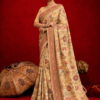
The softest cotton there is.
What it’s made of
Mulmul, also called muslin, is a loosely woven, plain-weave 100% cotton fabric. It is one of the oldest textiles in the world and one of the most breathable. If you have ever picked up a saree and thought, this is impossibly light, it was probably mulmul.
A short history
The finest muslin has always been associated with Bengal, especially Dhaka and the villages around it. Under the Mughals, fine muslin was woven for royalty, and by the 17th and 18th centuries Bengal was the world’s leading exporter of it. The cloth was so fine that it was described as woven air. Mulmul remains the name used for it across much of India, and Bengal still weaves it.
What it feels like
Imagine the softest, most worn-in cotton you have ever touched, and then make it lighter. Mulmul is cool against the skin, soft without any stiffness, and slightly translucent. That translucency is part of what makes it beautiful.
How it wears
Mulmul drapes itself. It falls naturally around the body without much management, and it barely registers as weight, so it is ideal for long hours of daily wear. Because it is soft, pleats are gentle rather than crisp.
Is mulmul see-through?
Slightly. Mulmul is a low-GSM fabric, so light colours can look sheer. A matching petticoat solves it, and a darker colour is more opaque. This is normal and part of what the fabric is.
A note on weight
40–60 GSM. A standard cotton shirt is around 140 GSM. Lower GSM means lighter and more translucent.
How to wash it
- Wash: Machine wash cold (30°C) on a gentle cycle, or hand wash. Wash a new saree on its own for the first two or three washes, in case a colour bleeds. Cotton can shrink in hot water, so keep it cold.
- Dry: Hang in the shade or lay flat. Not the tumble dryer.
- Iron: Medium heat while slightly damp. Wrinkles come out quickly.
- Store: Fold along the pleats and keep it in a cotton or muslin bag.
More in Caring for cotton sarees.
Where it comes from
Historically Dhaka and Bengal. Today mulmul is woven and sourced across India, including West Bengal and Tamil Nadu.
Best for
- Rozana: daily and casual wear
- Aarambh: first-time wearers
- Warm weather and long hours of wear
- Anyone who finds heavier fabrics uncomfortable
If you like mulmul, read next
- Cotton Voile: lighter and crisper
- Khadi Cotton: hand-spun cloth
- All Fabric School posts and all care guides
Mulmul: quick answers
What is mulmul?
Mulmul, also called muslin, is a loosely woven, plain-weave 100% cotton fabric. It is one of the oldest textiles in the world and one of the most breathable.
Is mulmul the same as muslin?
Yes. Mulmul is the common Indian name for muslin cotton.
What does a mulmul saree feel like?
Cool and soft, without stiffness. It drapes itself and barely feels like weight.
Is a mulmul saree see-through?
It can be slightly sheer, especially in light colours. It weighs 40–60 GSM, while a standard cotton shirt is around 140 GSM.
How do I wash a mulmul saree?
Machine wash cold on a gentle cycle or hand wash, separately at first. Hang in the shade and iron on medium heat while slightly damp.
Does mulmul shrink?
Cotton can shrink in hot water or a hot dryer, so wash it cold and dry it in the shade.
When should I wear mulmul?
For Rozana, for Aarambh as a first saree, and in warm weather.