A silk and cotton weave from a Madhya Pradesh town that has been weaving for centuries.
What it’s made of
Chanderi comes from the town of Chanderi in Ashoknagar district, Madhya Pradesh. It is woven from fine cotton and silk yarn, and it comes in three kinds:
- Chanderi cotton: cotton in both directions. Light, breathable and the easiest to live with.
- Chanderi silk-cotton: silk and cotton together. This is what most people mean by a Chanderi saree. The silk gives a soft sheen and a fluid fall, and the cotton gives it stability.
- Pure silk Chanderi: silk in both warp and weft. Less common.
In the traditional silk-cotton Chanderi described in its GI registration, the warp is silk and the weft is cotton. Some weavers vary the mix, so ask us the exact composition of any saree on WhatsApp 9187109424.
A short history
Chanderi’s weaving tradition is usually traced back to around the 13th century, when the town sat on trade routes linking central India with the ports of Gujarat and the markets of the north. Early Chanderi was a very fine cotton, so thin that it was almost translucent. Silk entered the weave later, and in the 1930s weavers began using imported silk yarn, which is how the silk-cotton Chanderi we know today took shape. Chanderi is among the first products registered under India’s Geographical Indication (GI) law, in 2004–05.
How it’s woven
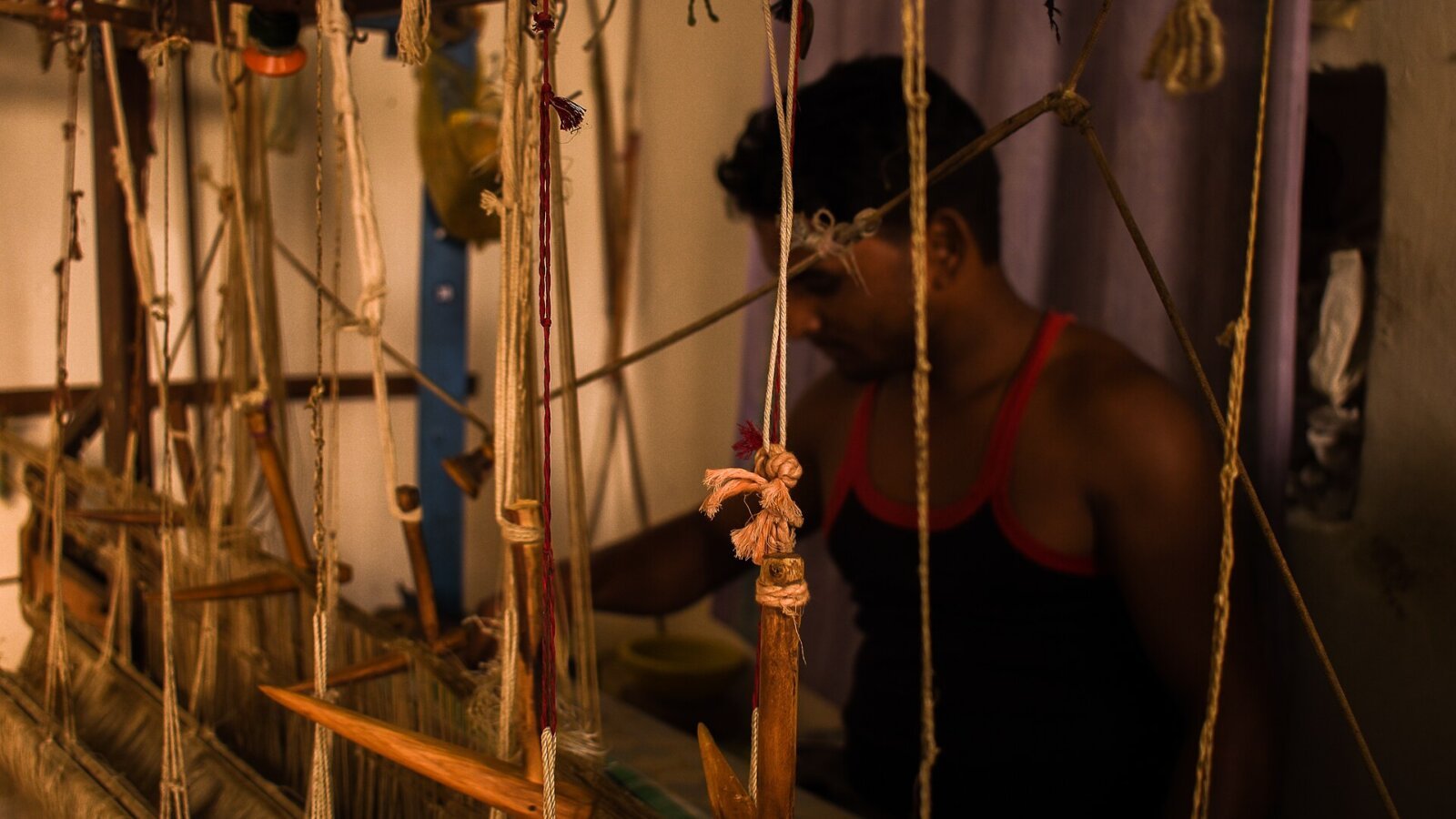
Chanderi is woven on handlooms, traditionally pit looms, often by families who work on a single saree for days. The borders and small motifs, called butis, are woven into the cloth with zari or extra thread as it is made, not printed on afterwards. A plain Chanderi with a simple border takes several days at the loom.
What it feels like
Light, slightly crisp, with a soft sheen that catches light without being flashy. Chanderi drapes more fluidly than pure cotton because of the silk, and it holds pleats better. The body is often slightly translucent. That is part of the fabric, not a flaw.
How to tell real Chanderi
- Hold it to the light. Real Chanderi is fine and semi-translucent.
- Look at the weave. Handwoven cloth has tiny irregularities. Machine-made cloth is perfectly uniform.
- Check the border and motifs. In a handloom they are woven into the cloth. A flat, printed look means they are not woven.
- Feel the sheen. Silk gives a soft, natural shine. A hard, glassy shine points to something else. TARINÉ never sells polyester.
- Ask about the GI or Handloom Mark. A GI tag confirms where the cloth comes from. It is not a grade of quality.
How it wears
Chanderi drapes with quiet elegance and does not need constant adjustment through a long day. It looks dressed up without trying, which is why it works for festive days and formal offices alike.
How to wash it
- Wash: Hand wash cold with a mild, pH-neutral detergent. Do not wring. Wash a new Chanderi on its own the first couple of times, in case a colour bleeds.
- Dry: Lay flat on a towel in the shade. Reshape while damp.
- Iron: Reverse side, low-to-medium setting. Use a pressing cloth over zari or embroidery.
- Heavy zari: For a saree with dense zari work, a trusted dry cleaner who knows silk is a sensible choice.
More detail in Caring for Chanderi and Maheshwari sarees.
A note on weight
60–80 GSM. Very light, even with the silk in it.
Where it comes from
Chanderi, Madhya Pradesh. GI-tagged.
Best for
- Tyohar: festive days and pujas
- Daftar: formal, quiet offices
- Aarambh: a first handloom saree for anyone who wants the feel of silk without full silk upkeep
If you like Chanderi, read next
- Maheshwari: silk warp, cotton weft
- Kota Doria: the summer square check
- All Fabric School posts and all care guides
Or browse our sarees.
Chanderi: quick answers
What is a Chanderi saree?
A light handwoven saree from Chanderi, Madhya Pradesh, made from silk, cotton or a mix of the two. The silk-cotton version is the most common.
Is Chanderi pure silk?
Usually not. Most Chanderi is a silk and cotton blend. Pure silk Chanderi and pure cotton Chanderi both exist.
Why is Chanderi slightly see-through?
The silk used in the warp is not fully degummed, and the weave is open and fine, which makes the cloth slightly transparent. It is how Chanderi has always been made.
Can I wash a Chanderi saree at home?
Plain silk-cotton Chanderi can be hand washed gently in cold water with a pH-neutral detergent. For heavy zari work, we suggest a trusted dry cleaner.
How do I know it is genuine Chanderi?
Check for slight irregularities in the weave and for borders and motifs that are woven in, not printed. Ask the seller about the GI or Handloom Mark.
Is Chanderi good for the office?
Yes. It is light, holds pleats and looks formal without being heavy.
What does the GI tag on Chanderi mean?
It confirms the cloth belongs to Chanderi and protects the name. It does not grade quality.
Photo: Avantikac98, CC BY-SA 4.0, via Wikimedia Commons. Cropped to fit.