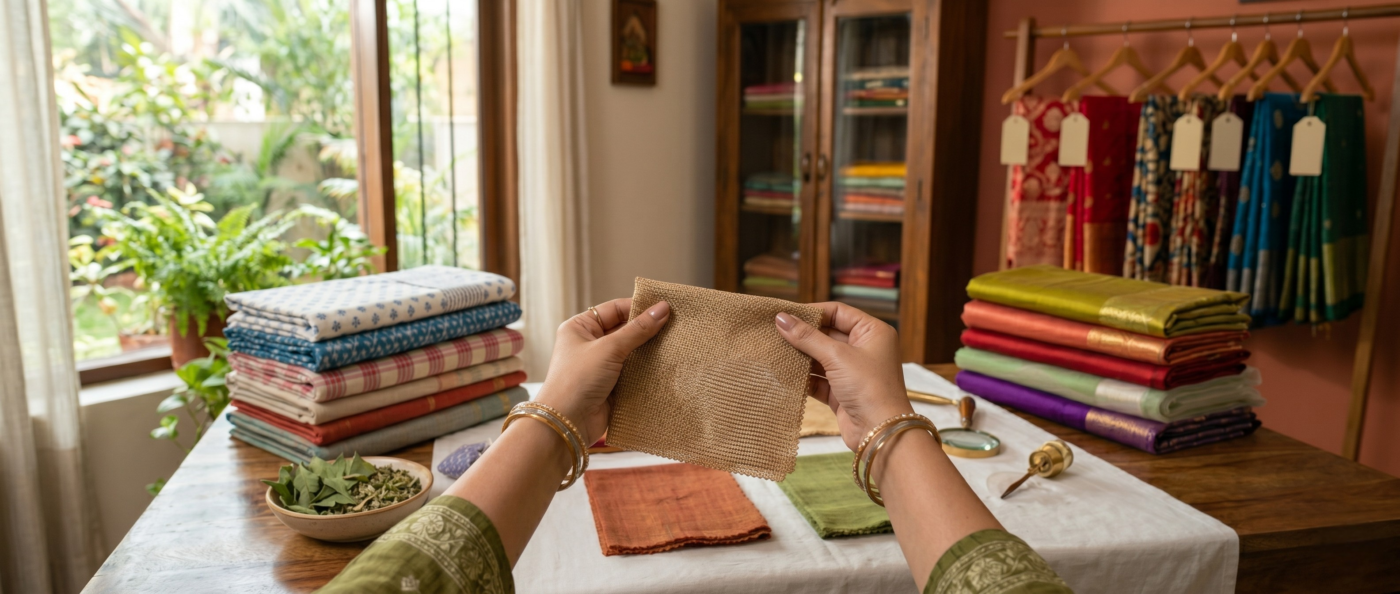
Mulmul / Muslin
| Mulmul / Muslin | |
|---|---|
| Made of | 100% cotton, loosely woven plain weave. One of the oldest textiles in the world. If you have ever picked up a saree and thought “this is impossibly light” — it was probably mulmul. |
| Feel | The softest cotton there is — cool, light, slightly translucent. Barely registers as weight against the skin. |
| How it wears | Drapes itself naturally with minimal management. Ideal for long daily wear. Soft pleats that suit the fabric. |
| Wash | Machine wash cold 30°C on a gentle cycle, or hand wash. |
| Dry | Hang in shade or lay flat. Not the tumble dryer. |
| Iron | Medium heat while slightly damp. Wrinkles come out quickly. |
| Weight | 40–60 GSM. A standard cotton shirt is around 140 GSM — mulmul is less than half that. TARINÉ mulmul sarees may be slightly sheer; this is normal and part of what the fabric is. |
| Origin | West Bengal · Erode, Tamil Nadu · Chandni Chowk, Delhi |
| Best for | Rozana · Aarambh · Warm weather · Long hours of wear |
Cotton Voile
| Cotton Voile | |
|---|---|
| Made of | 100% cotton, plain weave with a slightly higher thread count than mulmul. Crisper hand and more defined structure — still very light. |
| Feel | Cool, paper-like crispness. Smooth and light against the skin — more structured than mulmul without the cling. |
| How it wears | Cleaner, more defined pleats than mulmul. Holds shape well through a long day without adjustment. |
| Wash | Machine wash cold on a gentle cycle. |
| Dry | Hang in shade. Dries quickly. |
| Iron | Medium heat while slightly damp. The crispness recovers easily. |
| Weight | 50–70 GSM — same lightweight range as mulmul, but with more definition from the tighter weave. |
| Origin | Erode, Tamil Nadu · Ahmedabad, Gujarat · Chandni Chowk, Delhi |
| Best for | Rozana · Aarambh · Warm weather · First-time wearers who want slightly more structure than mulmul |
Khadi Cotton
| Khadi Cotton | |
|---|---|
| Made of | 100% cotton — yarn hand-spun on a charkha, fabric hand-woven on a handloom. Every metre is slightly irregular and entirely individual. |
| Feel | Slight roughness from the handspun yarn — honest and tactile. Not slippery, not silky, not crisp. Softens considerably after a few washes. |
| How it wears | Heavier than mulmul. Holds pleats reasonably well. Suits occasions where you want the fabric to feel substantial. |
| Wash | Machine wash gentle, cold water. The handspun yarn is durable. |
| Dry | Hang in shade. Dries slowly because of its weight. |
| Iron | Medium heat. Responds well to a warm iron. |
| Weight | 100–140 GSM — noticeably heavier than mulmul or voile. |
| Origin | KVIC outlets across India · Gujarat · West Bengal · Wardha, Maharashtra |
| Best for | Rozana · Daftar · Women who want to wear fabric with history and meaning |
Linen
| Linen | |
|---|---|
| Made of | Made from the flax plant — one of the oldest cultivated crops in the world. Stronger than cotton, heavier, with a distinctive natural texture. |
| Feel | Crisp when new, softens with washing. Textured and substantial. Holds its shape rather than flowing freely — it looks considered. |
| How it wears | Drapes with geometry — angular, naturally pressed-looking, clean at the shoulder and pallu. Suits formal and deliberate occasions. |
| Wash | Machine wash gentle at 30°C. |
| Dry | Hang in shade. |
| Iron | Medium-high heat while the fabric is still damp. Dry ironing dry linen accomplishes very little. |
| Weight | 120–160 GSM — noticeably heavier than cotton. |
| Origin | Sirampur, West Bengal · Ahmedabad, Gujarat · Bhiwandi, Maharashtra |
| Best for | Daftar · Cooler months · Women who want structure and clean lines |
Mangalgiri Cotton
| Mangalgiri Cotton | |
|---|---|
| Made of | 100% cotton woven in Mangalgiri, Andhra Pradesh. GI-tagged. Identifiable by its double-thread pattern, which creates a slight texture in the body and a characteristic contrasting border. |
| Feel | Slightly rougher than plain cotton — craft-made rather than mill-produced. Cool, breathable, with a natural weight that gives it good drape. |
| How it wears | Drapes well and holds pleats consistently. Visual interest even in plain colours. Looks deliberate and put-together without being dressy. |
| Wash | Machine wash cold on a gentle cycle. |
| Dry | Hang in shade. |
| Iron | Medium heat while slightly damp. The texture recovers fully. |
| Weight | 100–130 GSM — comfortable mid-weight cotton. |
| Origin | Mangalgiri, Andhra Pradesh (GI-tagged) |
| Best for | Daftar · Rozana · Natural, unprocessed aesthetic |
Kota Doria
| Kota Doria | |
|---|---|
| Made of | Cotton-silk blend (typically 70% cotton, 30% silk), or pure cotton variant. GI-tagged from Kota, Rajasthan. The characteristic square check (khat) is structural to the weave — not printed. |
| Feel | Crispness between voile and linen. Subtle sheen from the silk content. The square pattern gives visual texture even in plain colours. |
| How it wears | Holds pleats cleanly but stays comfortable in hot weather. One of the best summer sarees for anyone who wants structure without weight. |
| Wash | Hand wash for cotton-silk blend. Machine wash gentle for pure cotton variant. |
| Dry | Hang in shade. Dries quickly. |
| Iron | Medium heat while slightly damp. |
| Weight | 70–90 GSM — very light for a structured fabric. |
| Origin | Kota, Rajasthan (GI-tagged). Genuine Kota has the structural square pattern (not printed) and slight irregularity from handloom weaving. |
| Best for | Tyohar · Aarambh · Summer months |
Chanderi
| Chanderi | |
|---|---|
| Made of | Cotton warp and silk weft (or vice versa) — or pure cotton variant. GI-tagged from Chanderi, Madhya Pradesh. 700 years of weaving tradition. |
| Feel | Light, slightly crisp, with a soft sheen sitting between cotton and silk. The body has a slight translucency that is part of the fabric’s character. |
| How it wears | Quiet elegance. Holds pleats better than pure cotton. The silk content gives a fluidity that cotton alone does not achieve. |
| Wash | Hand wash cold with mild, pH-neutral detergent. Do not wring. |
| Dry | Lay flat on a towel in shade. Reshape while damp. |
| Iron | Reverse side, low-to-medium setting. |
| Weight | 60–80 GSM — very light despite the silk content. |
| Origin | Chanderi, Madhya Pradesh (GI-tagged). One of India’s most important handloom traditions. |
| Best for | Tyohar · Daftar · Women who want the feel of silk without full silk maintenance |
Maheshwari
| Maheshwari | |
|---|---|
| Made of | Silk warp and cotton weft. GI-tagged from Maheshwar, Madhya Pradesh. Reversible — both sides look finished. Made in the same town for centuries. |
| Feel | Softer and more fluid than Chanderi. Subtle lustre from the silk warp — present but not flashy. Natural weight drapes beautifully. |
| How it wears | More fluidity than Chanderi, more substance than mulmul. Holds pleats well through long hours of wear. |
| Wash | Hand wash cold with mild, pH-neutral detergent. |
| Dry | Lay flat in shade. Do not wring. |
| Iron | Reverse side, low setting. |
| Weight | 70–90 GSM — light but with drape weight that gives it presence. |
| Origin | Maheshwar, Madhya Pradesh (GI-tagged). The Maheshwar revival is associated with the Rehwa Society. |
| Best for | Tyohar · Daftar · Handloom tradition in an office-appropriate fabric |
Katan Silk
| Katan Silk | |
|---|---|
| Made of | Pure mulberry silk from Varanasi — tightly woven using twisted silk thread. Both warp and weft are silk. Traditional base fabric for Banarasi sarees. The word “katan” refers to the twisted-thread weaving technique. |
| Feel | Smooth, cool, and substantial. Quiet natural sheen — soft-glossy, not mirror-bright. Feels heavier than it looks. Uniform and smooth on both sides. |
| How it wears | Drapes with structure and authority. Crisp pleats that hold through a long occasion. Zari buti and border work adds visual weight without stiffening the body. |
| Wash | Hand wash gently in cold water with silk-friendly detergent, or dry clean. Do not soak. Wash separately — metallic zari thread can tarnish if rubbed against other fabrics. |
| Dry | Squeeze water out gently, roll in a clean towel, then dry flat in shade. Direct sunlight can dull the sheen. |
| Iron | Low heat on the reverse side only. Never iron directly over the zari border or pallu — the metallic thread can flatten and lose lustre. |
| Weight | 80–100 GSM — medium-light, but denser than the GSM suggests because of the tight twist in the yarn. |
| Origin | Varanasi, Uttar Pradesh (GI-tagged). The Katan weave is specific to Banaras and is not produced at this quality level elsewhere in India. |
| Best for | Shaadi · Tyohar · Banarasi tradition in a contemporary colour |
Tussar Silk
| Tussar Silk | |
|---|---|
| Made of | Wild silk produced by the tussar silkworm (Antheraea mylitta), which feeds on forest trees — sal, arjun, asan. Unlike cultivated mulberry silk, tussar is wild silk. Coarser, more textured, with a warm natural golden-amber colour. |
| Feel | Textured, warm, and substantial. Does not have the slippery smoothness of Silk Crepe or the sheer lightness of Georgette. Feels like a textile — with variation in the weave, a slight roughness, and the warmth of something genuinely natural. |
| How it wears | Drapes with weight and presence. Falls with intention rather than floating. Holds its form well and does not need constant adjustment. |
| Wash | Hand wash in cold water with mild, pH-neutral detergent. No soaking. |
| Dry | Lay flat on a clean towel. Reshape while damp. Do not hang to dry. |
| Iron | Reverse side only, low-silk setting. Use a pressing cloth. |
| Weight | 80–110 GSM — heavier and denser than Chanderi. |
| Origin | Bhagalpur, Bihar (GI-tagged, sometimes called Silk City) · Jharkhand |
| Best for | Tyohar · Shaadi · Women who want silk with a natural, artisanal aesthetic |
Matka Silk
| Matka Silk | |
|---|---|
| Made of | Spun silk made from shorter fibres left over from the reeling process — twisted and spun rather than drawn as continuous filaments. Thicker, uneven, textured yarn with visible slub that looks handmade. |
| Feel | Rough and honest — not what most people expect silk to feel like. Not smooth or slippery. Almost cotton-like in texture, but with the weight and lustre of silk. |
| How it wears | Weight and substance. Holds its form well and suits structured occasions. Does not flow or billow — it falls. |
| Wash | Hand wash in cold water with mild detergent. Gentle handling. |
| Dry | Lay flat on a towel. Reshape while damp. Do not wring. |
| Iron | Reverse side, low-silk setting. |
| Weight | 100–130 GSM — one of the heavier fabrics in our catalogue. |
| Origin | Bhagalpur, Bihar · Murshidabad, West Bengal |
| Best for | Tyohar · Jashn · Silk weight and lustre with a natural, non-polished aesthetic |
Silk Crepe
| Silk Crepe | |
|---|---|
| Made of | 100% mulberry silk made from tightly twisted yarn, creating a slightly pebbled or matte surface rather than high-shine. The crepe weave gives a distinctive fluid drape — slightly stretchy. |
| Feel | Smooth to the touch but not slippery. Subtle texture from the crepe weave — slightly matte rather than reflective. Moves with the body rather than against it. |
| How it wears | More forgiving than most silks — small pleating errors are less visible because the fabric recovers gracefully. Suits both evening occasions and formal daytime events. |
| Wash | Hand wash in cold water with mild, pH-neutral detergent. Rinse gently. |
| Dry | Lay flat on a clean towel. Reshape while damp. |
| Iron | Reverse side, low-silk setting. |
| Weight | 80–110 GSM — mid-weight for a silk. |
| Origin | Bangalore, Karnataka · Varanasi, Uttar Pradesh |
| Best for | Shaadi · Jashn · Daftar · First-time silk wearers — the most manageable of our silk options |
Silk Georgette
| Silk Georgette | |
|---|---|
| Made of | 100% mulberry silk with a sheer, lightweight quality and slightly rough texture from crepe-twist yarn. Lighter and more transparent than Silk Crepe. |
| Feel | Light, slightly sheer, catches light differently as you move. Does not feel smooth like satin — it floats. The silk that makes other silks look heavy. |
| How it wears | Extraordinary fluidity. The pallu moves with air currents and the body. Pleats are soft rather than crisp — this is correct for the fabric. |
| Wash | Hand wash in cold water with mild detergent. The most delicate fabric in our catalogue — handle gently. |
| Dry | Lay flat on a towel and reshape while damp. Do not hang. |
| Iron | Very low heat on the reverse side only. Use a pressing cloth. Georgette scorches easily. |
| Weight | 50–70 GSM — the lightest silk in our catalogue. |
| Origin | Indian mulberry silk centres |
| Best for | Jashn · Shaadi (reception and cocktail) · Women who want extraordinary without heaviness |
Silk Organza
| Silk Organza | |
|---|---|
| Made of | 100% mulberry silk with a very open plain weave and a stiff, crisp hand. Sheer but holds its shape rather than draping — almost architectural. |
| Feel | Stiff, papery-crisp, and sheer. Catches light and holds it — a luminosity that is difficult to achieve with softer silks. |
| How TARINÉ uses it | Border and accent panel only — never as a full saree base fabric. Sewn onto the edge of a saree to add structure and luminosity. This is stated on every product page where organza appears. |
| Wash | Hand wash very gently in cold water. Lay flat to dry — do not hang. Care for the full saree is governed by the base fabric, not the organza border. |
| Iron | Very low heat only. Organza is delicate and easily distorted by heat. |
| Weight | 30–50 GSM — extremely light, but the open weave makes it feel much stiffer than its weight suggests. |
| Best for | Evening and festive sarees where border detail matters · Used as accent panel only, never as the full saree base |
Modal
| Modal | |
|---|---|
| Made of | Regenerated fibre from beech wood pulp. Semi-natural: the raw material is natural, the process industrial. Famously soft — softer than cotton, more fluid than linen. |
| Feel | Soft, fluid, and weighted enough to fall with natural grace. The fabric equivalent of a favourite worn-in garment that happens to drape beautifully. Does not feel crisp or structured. |
| How it wears | Natural, graceful drape. Excellent for long hours of wear. Wrinkles less than cotton and recovers well from packing. Does not hold a sharp structured pleat. |
| Wash | Machine wash gentle at 30°C. |
| Dry | Hang in shade. Dries quickly. |
| Iron | Low setting while slightly damp. |
| Weight | 80–120 GSM — mid-weight and fluid. |
| Origin | Surat and Ahmedabad, Gujarat · Tirupur, Tamil Nadu |
| Best for | Rozana · Daftar · Women who prioritise softness and comfort over structure |
Viscose / Rayon
| Viscose / Rayon | |
|---|---|
| Made of | Regenerated fibre from wood pulp cellulose. Semi-natural: the raw material is plant-based, the manufacturing process uses chemical solvents. Historically marketed as “artificial silk” — and its drape quality justifies the comparison. |
| Feel | Fluid with a slight silky sheen. Feels cool against the skin. Significantly more affordable than natural silk while achieving a similar aesthetic effect. |
| How it wears | Fluidity and movement. Pleats are soft rather than structured. Suits occasions where the aesthetic effect of silk is desired without the price or maintenance demands. |
| Wash | Gentle hand wash in cold water, or delicate machine cycle at 30°C. |
| Dry | Lay flat. Viscose can stretch when wet and hanging heavy. |
| Iron | Low heat on the reverse side while slightly damp. |
| Weight | 80–120 GSM — similar to Modal. |
| Origin | Surat, Gujarat · Bhiwandi, Maharashtra. TARINÉ always requests composition verification — blended yarns with polyester are common in these markets. |
| Best for | Tyohar · Shaadi · Women who want the look and feel of silk at a more accessible price point |
Tencel / Lyocell
| Tencel / Lyocell | |
|---|---|
| Made of | Lyocell fibre from eucalyptus wood pulp, produced in a closed-loop process that captures and reuses approximately 99% of the chemical solvent. Semi-natural — significantly lower environmental impact than conventional viscose. Tencel is the brand name for Lyocell. |
| Feel | Softer than cotton, with a slightly silky drape — almost silk-like without silk’s delicacy. Smooth and cool against the skin. More breathable than modal. |
| How it wears | Drapes beautifully and holds pleats better than modal. Gets better with washing — softens without losing its drape. One of the most versatile fabrics in our catalogue. |
| Wash | Machine wash gentle at 30°C. |
| Dry | Hang in shade. Dries quickly. |
| Iron | Low setting while slightly damp. |
| Weight | 80–120 GSM — similar to modal but with a slightly crisper hand. |
| Origin | Surat and Ahmedabad, Gujarat |
| Best for | Daftar · Rozana · Natural-fibre feel, machine-washable ease |