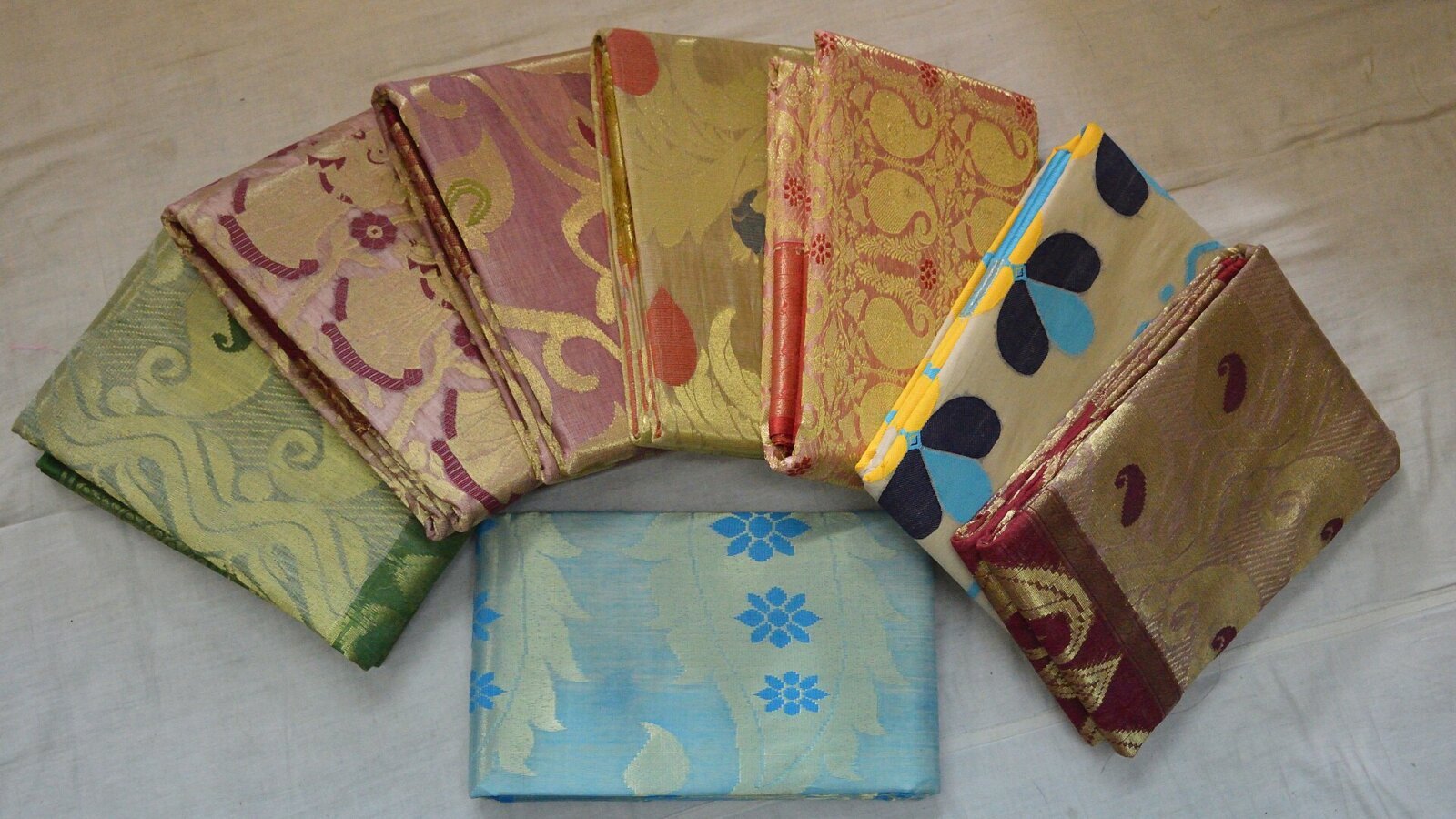
Wild silk: earthy, textured and unmistakably natural.
What it’s made of
Tussar silk, also called kosa silk, is produced by the tussar silkworm (Antheraea mylitta), which feeds on forest trees such as sal, arjun and asan. It gives a coarser, more textured silk with a warm, natural golden-amber colour. Unlike cultivated mulberry silk, tussar is wild silk.
A short history
The name tussar is said to come from the Sanskrit word tasara, meaning shuttle. India is one of the world’s largest producers of tussar, and it is the home of tropical tussar, which is largely tended by tribal communities. Jharkhand has become the biggest producer in recent years, and Bihar, West Bengal, Chhattisgarh, Odisha and Madhya Pradesh also produce it. Bhagalpur in Bihar is the best-known weaving centre, and Bhagalpur silk carries a GI tag.
How tussar is different from mulberry silk
Mulberry silk comes from silkworms that are raised indoors on mulberry leaves, and it is smooth and glossy. Tussar comes from worms that live on forest trees, and the cloth is coarser, less glossy and more textured. It looks and feels more rustic.
What it feels like
Textured, warm and substantial. Tussar does not have the slippery smoothness of silk crepe or the sheer lightness of georgette. It feels like a textile, with variation in the weave, a slight roughness and the warmth of something natural.
How it wears
Tussar drapes with weight and presence. It does not flow like georgette. It falls with intention, holds its form and does not need constant adjustment.
How to tell real tussar
- A golden or earthy tone. The natural colour is warm, not bright white.
- A textured surface. Slubs and variation are normal.
- A muted sheen. Tussar is less glossy than mulberry silk.
- Ask how it was woven. Message WhatsApp 9187109424 about any saree.
How to wash it
- Wash: Hand wash recommended, in cold water with a mild, pH-neutral detergent. No soaking. Test a hidden corner first: dab it with a damp white cloth, and if colour comes off, take the saree to a trusted dry cleaner instead.
- Dry: Lay flat on a clean towel. Reshape while damp. Do not hang to dry.
- Iron: Reverse side only, on the silk setting. Use a pressing cloth.
More in Caring for silk sarees.
A note on weight
80–110 GSM. Heavier and denser than Chanderi.
Where it comes from
Bhagalpur in Bihar and Jharkhand are the primary production and weaving centres.
Best for
- Tyohar: festive occasions
- Shaadi: wedding and function wear
- Anyone who wants silk with a natural, artisanal look
If you like tussar, read next
Tussar Silk: quick answers
What is Tussar Silk?
Wild silk produced by the tussar silkworm, which feeds on forest trees such as sal, arjun and asan. It is coarser and more textured than mulberry silk, with a golden-amber colour.
Is tussar the same as kosa silk?
Yes. Kosa is another name for tussar silk.
What does tussar feel like?
Textured, warm and substantial, with slight variation in the weave.
How do I wash a tussar saree?
Hand wash recommended, in cold water with a pH-neutral detergent. Lay flat to dry and iron on the reverse with a pressing cloth. Test colour on a hidden corner first.
Where is tussar made?
Bhagalpur in Bihar and Jharkhand are the main centres.
When should I wear tussar?
For Tyohar and Shaadi, when you want silk with a natural, artisanal look.
Photo: Biswarup Ganguly, CC BY 3.0, via Wikimedia Commons. Cropped to fit.